Rajapara, PO+DT- Pakur, Jharkhand


Through 110+ government schools, 63 learning centres, and grassroots community initiatives focused on education, women empowerment, and inclusive development.


Pakur in its emergence and inception had been a cluster of ponds and orchards surrounded by deep forest and hard rocks under the range of Rajmahal hills. It had previously been Raj in its new dimension under the British rule. The British had also been the centre of revolutionary activities, the repercussions of which might be seen in the Santhal Hul of 1855.
There is evidence of area having been inhabited since very early times. Among the early settlers of their territory of whom there is any record, are the Maler (Sauria Paharias) who still inhabit some areas of Rajmahal hills and its adjoining hilly tracts. They have been identified with “Malli” period of Chandragupta Maurya. According to him the Malli were a race holding the country between the people of Magadh and the people of lower Bengal. A reference has also been found in the travel account of Hiuen Tsiang, the Chinese pilgrim, who visited India about 645 AD.
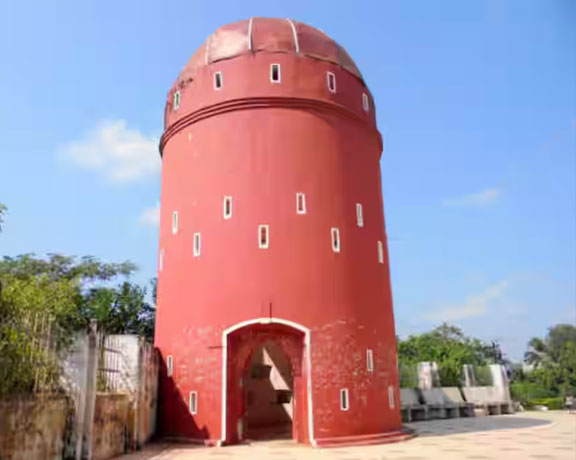
From the record of his travels it is learnt that he visited the kingdom of Champa, the Northern boundary of which extended along the Ganges from Lakhisari to Rajmahal hills while the Southern boundary passed through desert wilds in which were wild elephants and savage beasts that roamed in herds. To the east of Champa lay the kingdom of Kie-Ching Kielo, which according to General Cunningham was the tract of the country included in the present Santhal Pargana.
After the downfall of Harshavardhan, the king of North India upto the advent of Mohammedans rules in 12th Century this area remained in oblivion due to its deep forests and inaccessible passes. The authentic history of the area may be said to begin with rule of the Mohammadans when their armies marched to and from Bengal through the Teliagarhi pass. According to Mohammedans historians Teligarhi pass the “key of Bengal” as it was called, was the scene of numerous battles. The next important event in the history of this area was the establishment of Rajmahal as the capital of Bengal in 1592 to signalize the importance of the Mughal victory. The Mughal Govt. seeing the little prospects of revenue from these barren hills had been content to leave control of them to Mansabars of whom the chief were the Khatauri family of Manihari. The founder of the family helped Raja Man Singh, the reputed general of Mughal emperor Akbar in Bengal invasion. In reward he got the office of Mansab Jagir of the tract Rajmahal and Pakur on the east of the hills to Kahalgaon and Godda on their western face. Whether the control they exercised was effective or, as is more probable.
There is evidence of area having been inhabited since very early times. Among the early settlers of their territory of whom there is any record, are the Maler (Sauria Paharias) who still inhabit some areas of Rajmahal hills and its adjoining hilly tracts. They have been identified with “Malli” period of Chandragupta Maurya. According to him the Malli were a race holding the country between the people of Magadh and the people of lower Bengal. A reference has also been found in the travel account of Hiuen Tsiang, the Chinese pilgrim, who visited India about 645 AD. From the record of his travels it is learnt that he visited the kingdom of Champa, the Northern boundary of which extended along the Ganges from Lakhisari to Rajmahal hills while the Southern boundary passed through desert wilds in which were wild elephants and savage beasts that roamed in herds. To the east of Champa lay the kingdom of Kie-Ching Kielo, which according to General Cunningham was the tract of the country included in the present Santhal Pargana.
After the downfall of Harshavardhan, the king of North India upto the advent of Mohammedans rules in 12th Century this area remained in oblivion due to its deep forests and inaccessible passes. The authentic history of the area may be said to begin with rule of the Mohammadans when their armies marched to and from Bengal through the Teliagarhi pass. According to Mohammedans historians Teligarhi pass the “key of Bengal” as it was called, was the scene of numerous battles. The next important event in the history of this area was the establishment of Rajmahal as the capital of Bengal in 1592 to signalize the importance of the Mughal victory. The Mughal Govt. seeing the little prospects of revenue from these barren hills had been content to leave control of them to Mansabars of whom the chief were the Khatauri family of Manihari. The founder of the family helped Raja Man Singh, the reputed general of Mughal emperor Akbar in Bengal invasion. In reward he got the office of Mansab Jagir of the tract Rajmahal and Pakur on the east of the hills to Kahalgaon and Godda on their western face. Whether the control they exercised was effective or, as is more probable.
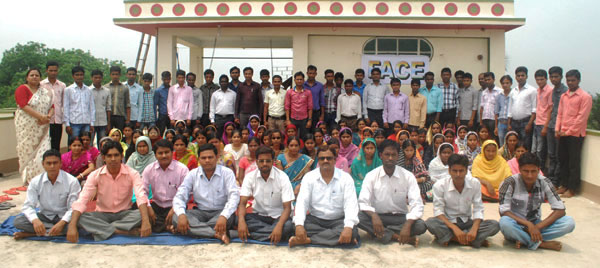
The journey of FACE started with the set up of "Shaishav", a drop in centre for children of local disadvantaged community. Gradually, FACE has gained recognition in Pakur by making its presence felt in various programmes on health and hygiene, education at different locations in Pakur district.
Though geographical area of operation of FACE is primarily limited to Pakur and its neighboring blocks but, its operation in terms of reach and coverage has increased over time. Organizing various activities like district level training, sensitization workshops for various stakeholders FACE
has now come to the limelight in the District. Successful implementation of programmes with support of Govt. of Jharkhand and adequate media coverage have also helped FACE to earn reputation at state level.
Along with Schedule Tribes & Muslim minorities, women have been given special focus throughout the journey of the organization. The poor economic & social plight of population in the district is the obvious reason for FACE to choose this district- Pakur as a work area, based the notion, “if you want to change the world, first change your home”.